How Much Do Smart Lights Cost for a Room or Whole Home?
A single smart-light room usually costs about $25 to $250. A 3-room starter setup runs about $75 to $750, and a whole-home rollout can land anywhere from $200 to over $2,000, depending on bulbs, switches, hubs, and labor. Skip the budget split and you can buy the wrong hardware, double up on hubs, or pay more for installation than the lights themselves. This guide breaks down bulb, switch, hub, and install costs so you can choose the cheapest workable setup.
To compare products quickly, use the related guides on smart bulbs, smart switches, home automation hubs, and LED bulb types when you are deciding what will fit the fixture and the budget.
Smart light costs at a glance
Smart lights span a wide price range. Retail listings commonly run from budget models under $10 to premium color bulbs around $50 or more; for example, Walmart lists the Wyze Bulb at $9.99, The Home Depot lists the Kasa Smart Bulb (White) at $7.99, and Best Buy lists a Philips Hue White and Color bulb at $49.99. Manufacturer pages and retailer listings also show that multipacks usually lower the unit cost, especially for simple white bulbs. Wyze Bulb White, Kasa Smart Bulb (White), and Philips Hue White and Color Ambiance A19 are useful price anchors.
A smart bulb is an LED bulb with built-in app control, voice control, or both. It may connect over Wi-Fi, Bluetooth, Zigbee, or Matter. A19 and BR30 are common shapes, and the shape matters because it has to fit the fixture before any app feature matters.
White vs color-changing pricing
White smart bulbs are the lower-cost entry point. Color-changing bulbs cost more because they include more LEDs and more color controls. A basic white bulb can be a budget pick, while a full-color bulb can cost several times more than a standard white model. The gap is visible in retail pricing: entry-level white bulbs are often under $10, while color models frequently start closer to $35 to $50. Wyze Bulb White and Philips Hue White and Color Ambiance A19
Three price anchors help when you compare products. Kasa Smart Bulb (White) is listed at $7.99. Wyze Bulb is listed at $9.99. Philips Hue White and Color Bulb is listed at $49.99.
Where multipacks lower unit cost
Buying in a multipack can reduce the cost per bulb, especially for rooms with several fixtures. A four-pack of Wyze Bulb runs $34.98, which is cheaper per bulb than buying four single bulbs at full single-unit pricing. Some Sengled multipacks can drop per-bulb cost by 30% or more.
That savings matters most in rooms with matching fixtures. One bedroom bulb may not justify a pack. A living room with four recessed cans often does.
What changes the price?
Price changes with connectivity, bulb shape, ecosystem choice, and whether you need indoor or outdoor gear. Hubless Wi-Fi bulbs often have lower entry cost, but larger systems can make hub-based setups cheaper or easier to manage across many rooms. Outdoor lights usually cost more because weatherproofing and installation add complexity.
Wi-Fi, Bluetooth, Zigbee, and Matter
Smart lights may depend on Wi-Fi, Bluetooth, Zigbee, or Matter connectivity. Wi-Fi bulbs usually need no separate bridge, but they can add network load in a large home. Bluetooth bulbs tend to suit smaller setups. Zigbee and Matter can scale better when paired with the right hub or controller. Matter support can also reduce brand lock-in when you want to mix compatible devices across rooms.
Hub-required systems add upfront cost, but they can make room-wide control more practical when you have many bulbs. Hubless systems keep the first purchase simpler, though mixing brands often gets harder.
A19, BR30, and outdoor fixtures
A19 bulbs are the standard household shape for table lamps and many enclosed fixtures. BR30 bulbs are common in recessed cans. Outdoor smart lights and floodlights cost more because they need weather resistance, more durable housings, and more involved mounting.
A common first-timer mistake is buying a bulb by price alone and discovering the base, shape, or depth does not fit the fixture. That error can turn a low-cost bulb into a return, a replacement order, or an electrician visit.
Brand ecosystem and app control
One-brand ecosystems usually make whole-home control simpler because the app, scenes, schedules, and room groups stay inside one system. Most major platforms also support Alexa, Google Assistant, or Siri in some form. That matters if you want room-wide scene control, sunrise routines, or voice commands without juggling several apps.
One room budget worksheet
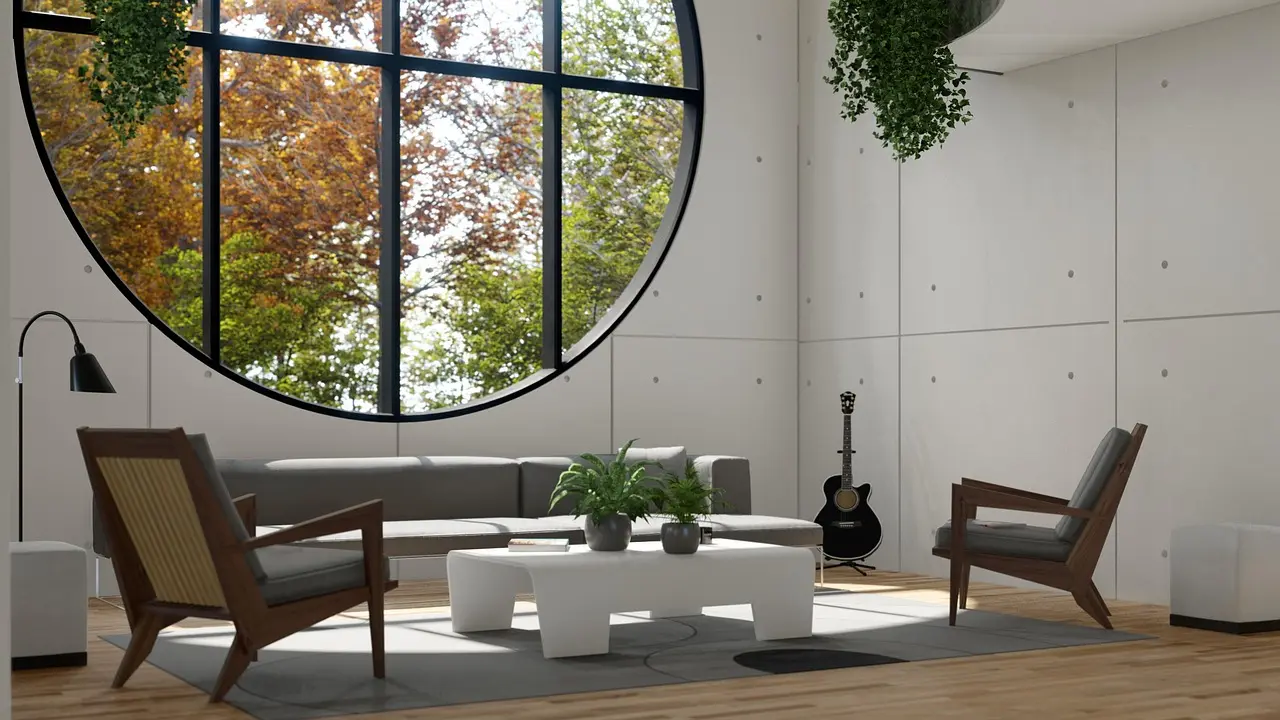
A one-room setup is the easiest place to price smart lighting correctly. The lowest-cost version replaces only the bulbs. The better long-term version often uses a smart switch when a room has several matching fixtures, because one switch can control all of them at once.
Assumptions block: for the worksheet below, use 9-watt smart bulbs, 5 hours of use per day, and a $0.15 per kWh electricity rate. Those assumptions align with commonly used LED wattages and with the U.S. average residential electricity price reported by the U.S. Energy Information Administration. U.S. Energy Information Administration
Bedroom or living room example
Say your bedroom has two A19 lamps and you want app control plus voice commands. A bulb-only setup can stay low cost if you use white Wi-Fi bulbs. A small room with one switch-controlled ceiling light may be cheaper with a smart switch instead of two or three separate bulbs.
Worked example: using the assumptions above, two 9-watt bulbs total 18 watts. 18 ÷ 1,000 × 5 hours × $0.15 × 30 days = about $0.41 per month. If you use one smart switch instead of two bulbs, your hardware total may be lower or higher depending on the switch price, but the ongoing electricity cost will usually be similar for the same lighting load. For labor pricing, a basic smart switch installation commonly adds a professional fee in the rough range of $75 to $200+, depending on the job, wiring, and local market. Homewyse light switch installation cost
| Item | Assumption | Estimated one-time cost | Estimated monthly electricity cost |
|---|---|---|---|
| Bulb-only room | 2 white A19 smart bulbs, Wi-Fi, no hub | $16 to $50 | $0.10 to $0.40 |
| Switch-led room | 1 smart switch controlling 2 to 4 fixtures | $25 to $80 for hardware | $0.05 to $0.30 |
| Installer add-on | Needed if wiring or dimmer compatibility is uncertain | $75 to $200+ labor | $0 |
For a simple room, the smart switch often costs less overall if it replaces several fixed lights. A bulb-only setup usually wins when you need portable lamps or a landlord will not allow wiring changes.
How much does it cost to smart-light a 3-room setup?
A 3-room starter setup usually lands between $75 and $750 because the fixture count and mix of product types matter more than the room count alone. Three small rooms with a few bulbs can stay modest. Three rooms with recessed cans, dimmers, and color bulbs move the total up fast.
Starter home lighting scenario
Picture a starter home with a bedroom, a living room, and a kitchen. A bedroom may need two bulbs, a living room may need four, and a kitchen may need BR30 bulbs or a switch that controls multiple cans. Shared hub cost can help if you buy into Zigbee or Matter gear in more than one room.
Here the hidden cost is often compatibility. A dimmer switch may not work well with every smart bulb, and some fixtures need deeper cans or specific bulb bases. Buying the wrong type can add return costs and delay the install.
Worked example: if the bedroom uses two 9-watt bulbs, the living room uses four 9-watt bulbs, and the kitchen uses one 9-watt smart switch-controlled circuit equivalent to 18 watts of lighting load, the total is 72 watts. 72 ÷ 1,000 × 5 hours × $0.15 × 30 = about $1.62 per month. If you add a hub for Zigbee or Matter, include that upfront hardware in the room total. Home Depot smart hubs
Where multipacks and shared hubs help
Multipacks matter more in a 3-room setup because the same bulb type appears again and again. Shared hubs also help because one bridge can support several bulbs and scenes across multiple rooms. That can lower the per-room cost compared with buying isolated devices for each room.
For a small multi-room plan, budget for one app ecosystem, one control method, and one compatible bulb family. Mixing brands can be fine for a small number of devices, but it often gets expensive or awkward at scale.
How much does it cost to smart-light a whole house?
A whole-home rollout can range from a few hundred dollars to well over $2,000 because the cost rises with fixture count, switch count, outdoor gear, and labor. A house with many ceiling fixtures often makes switch-based control cheaper than replacing every bulb with a smart model.
Switch-led whole-house plan
A switch-led plan is often the lower-cost path for fixed lights in bedrooms, hallways, kitchens, and common areas. One smart switch can control a cluster of fixtures, so you avoid paying for six or eight smart bulbs where one switch would do the job.
That approach also fits whole-home scenes better. You can group rooms, set schedules, and keep control in one ecosystem instead of paying for a smart bulb in every socket.
Bulb-heavy whole-house plan
A bulb-heavy plan makes sense for lamps, decorative fixtures, and rentals where wiring changes are off limits. It costs more when the home has many recessed fixtures, because every socket needs a smart bulb. In that case, the difference between a $7.99 bulb and a $49.99 color bulb adds up quickly.
Outdoor lighting and install costs
Outdoor smart lights cost more because the fixture itself is usually more specialized, and installation may need weatherproof mounting or a rated enclosure. Expect higher labor risk as well. Outdoor circuits, porch lights, and floodlights are not the same budget as a bedroom lamp.
For labor assumptions, basic electrical installation pricing commonly starts around the low double digits for simple work and rises quickly when wiring, fixture replacement, or outdoor mounting is involved; larger smart-light projects should budget for that variability rather than assuming a flat fee. Homewyse light fixture installation cost
Smart lighting cost worksheet
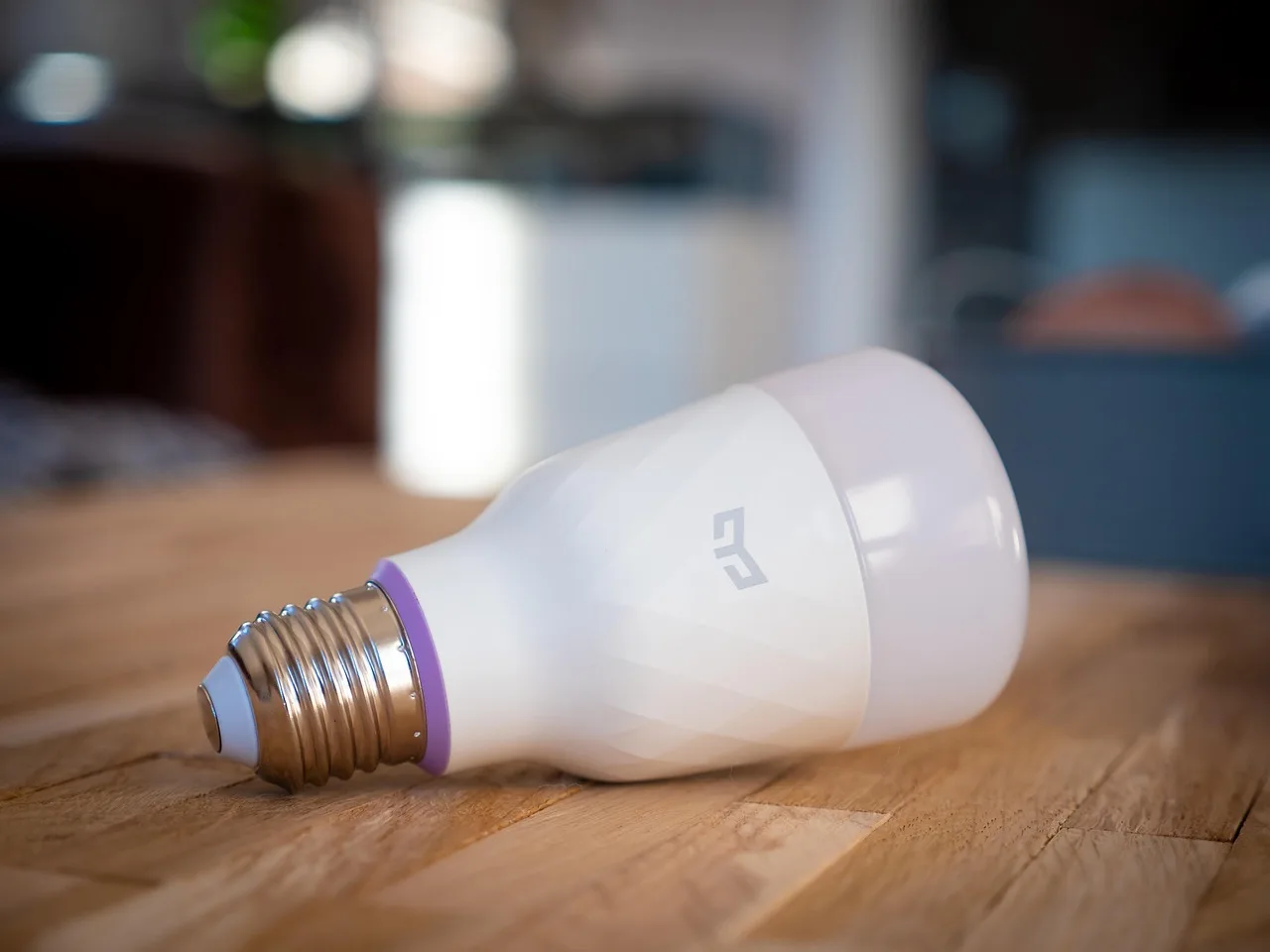
Use this worksheet to total the first purchase, then add electricity. Monthly operating cost uses the formula: watts divided by 1,000, times hours used, times your rate per kWh. Multiply that daily cost by 30 for a monthly estimate, then by 365 for a yearly estimate.
Assumptions block: use 9 watts per bulb, 5 hours per day, and $0.15 per kWh unless your local utility quote is different. The U.S. Energy Information Administration publishes average residential electricity prices, and local utility rates may be above or below that average. U.S. Energy Information Administration
| Scenario | Fixture count | Bulb or switch type | Hub or switch need | Estimated one-time cost | Estimated monthly electricity cost |
|---|---|---|---|---|---|
| One room | 2 bulbs or 1 switch | White A19 Wi-Fi bulbs or 1 smart switch | No hub for Wi-Fi; hub optional for Zigbee or Matter systems | $16 to $80 | $0.10 to $0.40 |
| 3-room starter setup | 6 to 10 bulbs or 2 to 3 switches | Mix of A19 and BR30 bulbs, or room switches | 1 shared hub if the chosen ecosystem needs it | $75 to $750 | $0.30 to $1.20 |
| Whole-home setup | 10 to 25+ fixtures | Switch-led for fixed lights, bulbs for lamps and special fixtures | Shared hub plus possible outdoor-rated gear | $200 to over $2,000 | $0.80 to $3.50+ |
| Fill-in calculator | Your bulb count × your wattage | Your bulb type | Your hub or switch need | Bulb cost + hub + install | (Watts ÷ 1,000) × hours × rate × 30 |
To fill the calculator row, enter the number of bulbs, the wattage per bulb, and your local kWh rate. Example: 4 bulbs at 9 watts each, used 5 hours per day, at $0.15 per kWh, gives 4 × 9 = 36 watts total; 36 ÷ 1,000 × 5 × 0.15 × 30 = about $0.81 per month.
Worked example: if your whole-home estimate uses 12 bulbs at 9 watts each, that is 108 watts total. At 5 hours per day and $0.15 per kWh, the monthly electricity cost is 108 ÷ 1,000 × 5 × 0.15 × 30 = about $2.43.
Are smart bulbs or smart switches cheaper?
Smart switches are usually cheaper for whole-room or whole-home control when one switch governs several fixtures. Smart bulbs are usually cheaper for lamps, rentals, and small spot upgrades. The lowest total cost depends on how many fixtures you need to control and whether wiring changes are allowed.
Replacement count and fixture compatibility
If a room has six recessed cans, six smart bulbs can cost far more than one smart switch. If the room has table lamps or special bulbs, a switch may not help. Fixture count and form factor decide the budget more than the label on the box.
Suppose a kitchen has four recessed BR30 fixtures. Four smart bulbs may work, but a smart switch can often control the same lighting for less money and less clutter. If that kitchen also has a dimmer, the switch choice must match the load and bulb compatibility.
Labor costs for wiring changes
Switches can be cheaper on hardware and more expensive on labor. If the job needs an electrician, the install cost can outweigh the savings from fewer bulbs. That tradeoff is why a renter often picks bulbs, while a homeowner with many fixed fixtures often picks switches.
Compact decision table
| Option | Best use case | Upfront cost | Install complexity | When it becomes cheaper overall |
|---|---|---|---|---|
| Smart bulbs | Lamps, rentals, color control, quick upgrades | Lower at first for one or two bulbs | Low; screw in and connect | Usually cheaper when you only need a few fixtures or cannot change wiring |
| Smart switches | Fixed ceiling lights, multiple fixtures, whole-room scenes | Higher hardware per switch, but one switch can cover many bulbs | Medium to high; may need wiring work | Usually cheaper once one switch replaces several smart bulbs in the same zone |
Ecosystem compatibility and whole-home scaling
The cheapest smart-lighting setup is not always the cheapest long-term ecosystem. Wi-Fi, Bluetooth, Zigbee, and Matter each change what you pay up front, how much network load you add, and whether scaling to more rooms means buying another hub. In practical budget terms, Wi-Fi is easiest for a small room, Bluetooth is fine for the smallest installs, Zigbee can be cost-effective when you want many bulbs on one bridge, and Matter can reduce brand lock-in if you want to expand later.
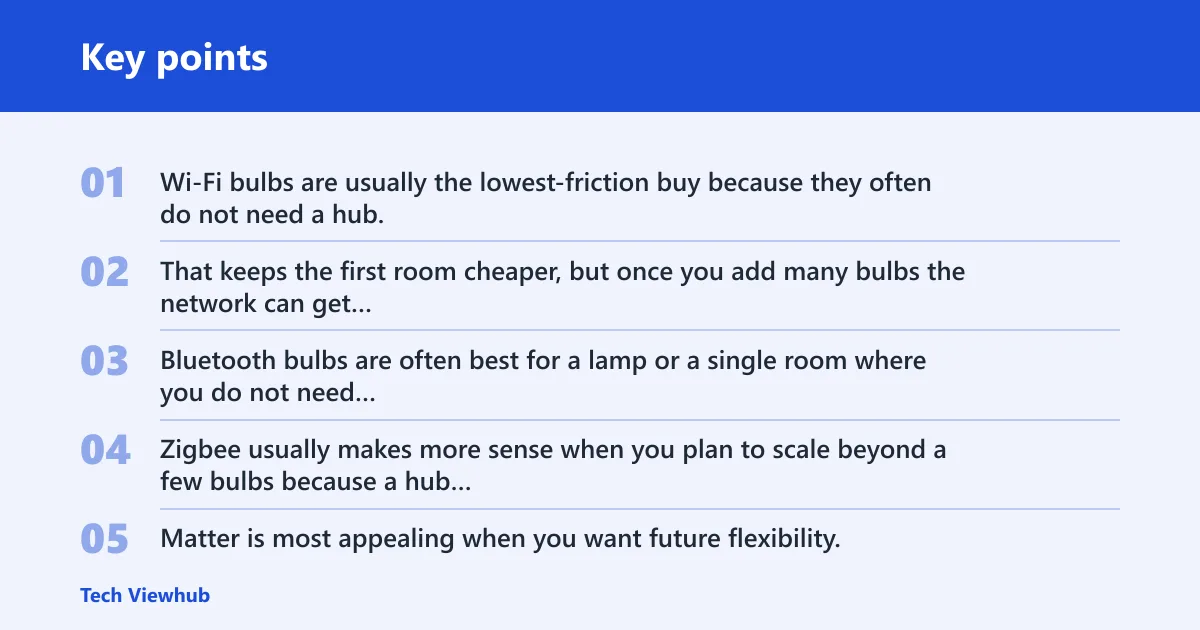
Wi-Fi bulbs are usually the lowest-friction buy because they often do not need a hub. That keeps the first room cheaper, but once you add many bulbs the network can get crowded and app setup can become messy. Bluetooth bulbs are often best for a lamp or a single room where you do not need house-wide automation. Zigbee usually makes more sense when you plan to scale beyond a few bulbs because a hub can centralize control and keep the bulb cost lower than premium Wi-Fi color models. Matter is most appealing when you want future flexibility, but it still may require a compatible controller or hub depending on the brand.
When is a hub worth paying for? A hub is usually worth it when you want several rooms on one system, you want better automation reliability, or you are mixing devices that are easier to manage through one controller. For a budget-minded home, the hub cost can pay back by avoiding duplicate apps, reducing the number of separate smart-light ecosystems, and letting you buy cheaper compatible bulbs instead of premium standalone ones. For one lamp or one bedroom, skip the hub unless the ecosystem requires it.
Whole-home scaling also changes the hidden cost. More bulbs mean more firmware updates, more room groups, and more chances to run into compatibility issues with dimmers, fixtures, or voice assistants. If you expect to expand later, buy one ecosystem first and use the same bulb family in repeated rooms. That keeps the cost model predictable and avoids paying twice for a hub or app migration.
Frequently asked questions
How much do smart light bulbs cost per bulb?
Standard white smart bulbs average around $15 to $25 each, while color-changing smart bulbs typically range from $35 to $50. Budget options can go lower, such as Kasa Smart Bulb (White) at $7.99 and Wyze Bulb at $9.99. Premium color bulbs can cost much more.
How much does it cost to smart-light one room?
A one-room setup usually costs $25 to $250, depending on bulb count, bulb type, and whether you use a smart switch. A small room with two white bulbs can stay near the low end. A room with several color bulbs, a hub, or electrician labor moves up quickly.
Are multi-packs cheaper than buying smart bulbs individually?
Yes. Buying multipacks can lower the per-bulb cost versus single bulbs. A four-pack of Wyze Bulb runs $34.98, and some Sengled multipacks can drop per-bulb cost by 30% or more. Multipacks help most when several rooms need the same bulb type.
Do smart lights cost more if they need a hub?
Usually yes, because the hub adds an extra upfront purchase. That said, a hub can help large Zigbee or Matter setups by making room groups and whole-home control easier to manage. For small Wi-Fi bulb setups, skipping the hub can keep the first bill lower.
Which is cheaper overall: smart bulbs or smart switches?
Smart switches are usually cheaper overall for fixed ceiling lights across a room or whole house because one switch can control multiple fixtures. Smart bulbs are usually cheaper for lamps, rentals, and small setups where wiring changes are not allowed. Fixture count decides the winner.
What hidden costs should I expect with smart lights?
Watch for electrician labor, dimmer compatibility, wrong bulb base or form factor, hub purchases, and replacement costs for renters or multi-unit homes. Outdoor lights can add weatherproofing and install complexity. These costs often matter more than the bulb price alone.
How much can I save by buying budget smart bulbs?
Budget bulbs can cut the first bill sharply. A $7.99 white bulb or a $9.99 white bulb costs far less than a $49.99 color bulb. The tradeoff is fewer features or less color control. For basic room lighting, budget bulbs can save enough to cover a second room.
Do smart lights use less energy than regular bulbs?
Yes, smart LEDs use less energy than incandescent bulbs because they draw fewer watts. Use the formula watts divided by 1,000 times hours used times your rate per kWh to estimate cost. A 9 watt LED left on 24 hours costs about 4 cents.
How do I estimate the total cost for my home?
Start with fixture count, then choose bulbs or switches, then add any hub, then add install labor if wiring changes are needed. After that, estimate electricity with the wattage formula. The cleanest budget uses one product family for rooms you want to control together.